
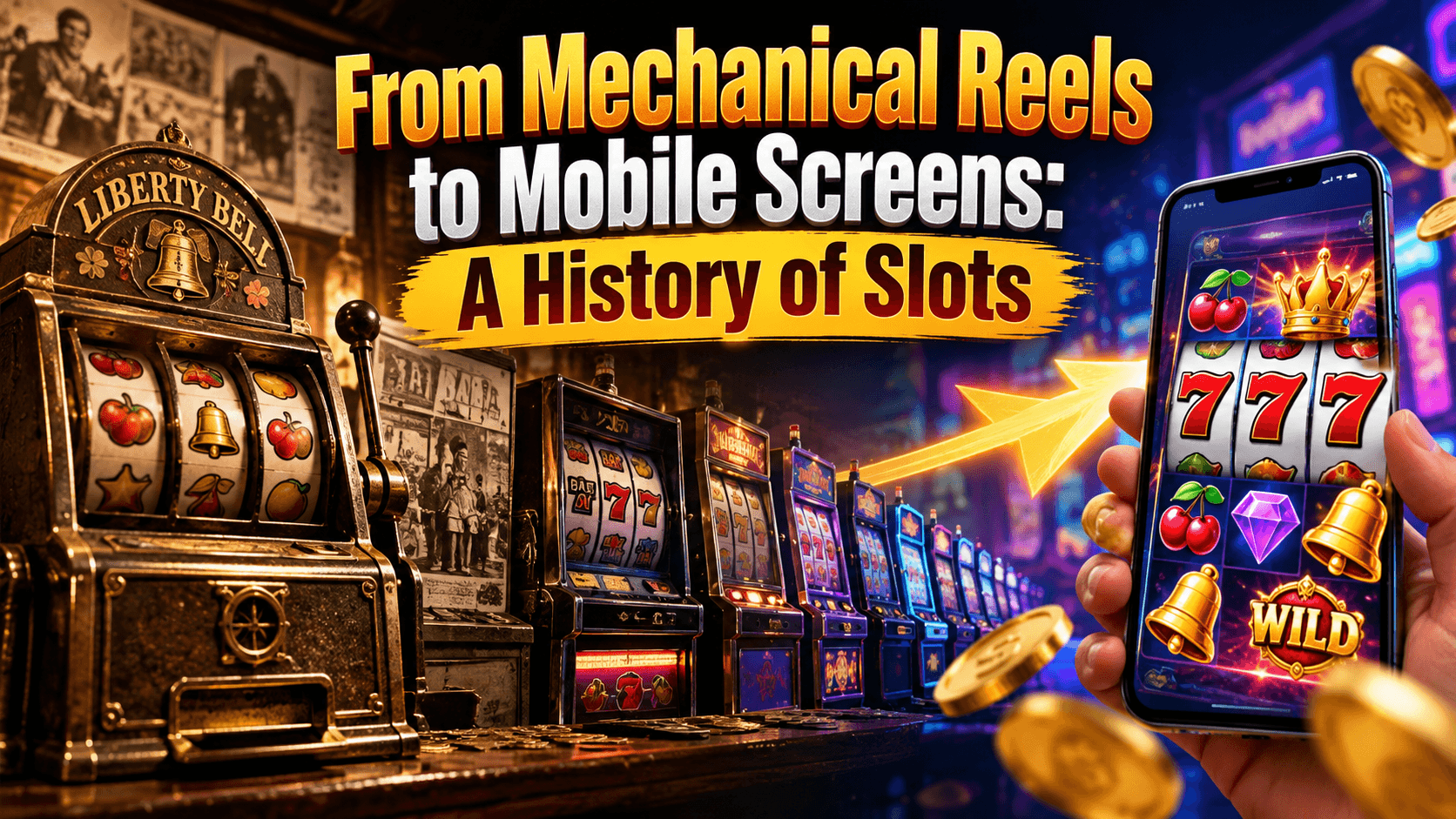
From Mechanical Reels to Mobile Screens: A History of Slots

Amit Salve
Editor-in-Chief
The Birth of the Liberty Bell
When you tap the spin button on your smartphone today, you are interacting with the culmination of over 130 years of gambling technology. The journey from heavy, mechanical iron boxes to lightweight, digital algorithms is a fascinating study in human psychology and technological advancement.
The story begins in 1895 with a car mechanic named Charles Fey. He invented the "Liberty Bell," the first true slot machine. It featured three mechanical reels and five symbols: horseshoes, diamonds, spades, hearts, and a Liberty Bell. The math was simple, the mechanics were entirely physical, and the payout was an automatic 50 cents.
The Electromechanical Revolution (1960s)
For decades, slots remained purely mechanical. That changed in 1963 when Bally released "Money Honey," the first electromechanical slot. It used electricity to power the reels and the hopper, allowing for much larger payouts (up to 500 coins) without needing an attendant. This era also introduced the flashing lights and electronic sounds that would become synonymous with casino gaming.
The Digital Age and the RNG (1980s)
The true turning point occurred when slots transitioned from physical reels to virtual ones driven by computers. The invention of the Random Number Generator (RNG) meant that the odds were no longer dictated by the physical size of the reel. A reel could theoretically have thousands of stops programmed into the software, allowing for massive, life-changing jackpots like the Megabucks system.
This was also the era where bonus rounds and video screens were introduced, fundamentally changing the player experience from simply watching reels spin to actively participating in second-screen games.
The Mobile Migration (2010s - Present)
With the advent of the App Store, developers realized that the core loop of a slot machine was perfect for mobile devices. Early iterations were clunky, flash-based ports of web games. However, developers quickly realized that to retain players without the lure of real money, they needed to innovate.
This led to the birth of the "Social Casino." Companies like Playtika and Moon Active introduced meta-games: leveling up, collecting cards, building villages, and competing in tournaments. They took the mathematical perfection of the RNG and wrapped it in the addictive progression loops of modern video games.
The Future: 2026 and Beyond
Today, mobile slots utilize advanced 3D rendering engines, live-ops event structures that rival massive multiplayer online games, and complex social economies. As VR and AR technologies become more mainstream, we are likely to see the social casino genre evolve once again, perhaps allowing players to virtually walk the floors of digital casinos with friends from around the world. The Liberty Bell has certainly come a long way.
Written by Amit Salve
Amit is a hardcore mobile gamer and the founder of TheFreeCoins. When he's not spinning slots or building virtual villages, he's writing guides to help the community maximize their daily rewards.